What Is On-Premise Laundry? A Complete Guide to Equipment, Workflow, and Facility Planning
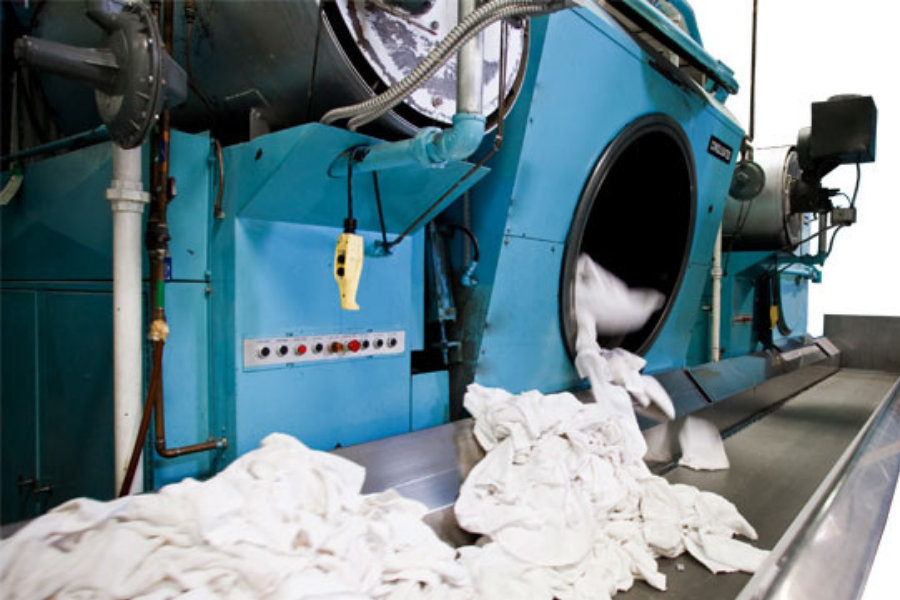
Laundry operations often sit quietly behind the scenes, yet they support some of the most demanding environments in the country. Hospitals, correctional facilities, and large institutions depend on a steady flow of clean linens to function without disruption. This is where an on-premises laundry becomes a core operational system rather than a supporting service.
By keeping linen processing inside the facility, organizations gain direct control over turnaround time, hygiene standards, and daily output. When planned correctly, on-premise laundry reduces dependency on external vendors and creates a more predictable, resilient operation built around real operational needs.
People Also Ask
1. What facilities benefit most from on-premise laundry?
Facilities with consistent linen volume, strict hygiene requirements, and limited tolerance for downtime benefit most from on-premise laundry operations.
2. Is on-premise laundry more cost-effective than outsourcing?
Cost effectiveness depends on volume, labor, and utility management, but on-premise operations often provide greater long-term cost control for high-volume facilities.
What Is On-Premises Laundry?
On-premises laundry refers to laundry operations fully owned and operated within a facility. All washing, drying, finishing, and staging activities take place on site using industrial systems designed for continuous duty.
Unlike outsourced models, on-premise laundry allows facilities to define their own processing schedules, quality standards, and workflow priorities. Production remains aligned with operational demand rather than third-party capacity or logistics constraints.
Why Facilities Choose On-Premise Laundry Over Outsourcing
Facilities choose on-premise laundry for control and consistency. Turnaround times remain fixed and predictable. Linens return to service without transportation delays or external handling risks.
Cost visibility also improves. While outsourcing may reduce upfront investment, long-term service contracts, transportation fees, and reprocessing costs often add up. On-site operations allow facilities to manage labor, utilities, and production volumes directly, resulting in greater long-term cost stability.
Also read: What Correctional Facilities Should Know About OPL Equipment Maintenance
Key Industries That Rely on On-Premise Laundry
Several sectors depend heavily on on-premise laundry systems:
- Healthcare systems and hospitals
- Long-term care and rehabilitation facilities
- Hospitality and resort operations
- Military and defense installations
- Correctional institutions
In each case, linen availability directly affects daily operations, staffing, and service delivery.
Core Components of an On-Premise Laundry Operation
A successful on-premise laundry program includes more than machines. It requires a coordinated system of equipment, layout design, utilities, staffing, and maintenance planning.
Key components include soil intake zones, wash-and-dry processing areas, finishing and folding stations, and clean linen storage. Each component must work together to maintain flow and avoid bottlenecks.
On-Premise Laundry Equipment Overview
On premise laundry equipment is designed specifically for industrial workloads and continuous operation. Core equipment categories include:
- Industrial washer extractors capable of handling heavy soil loads
- Industrial dryers designed for sustained heat and airflow demands
- Finishing equipment, such as folders and stackers
- Material handling systems to reduce manual movement
Equipment selection must align with daily volume, fabric types, and operating hours.
Designing an Efficient On-Premise Laundry Workflow
Workflow design determines how efficiently laundry moves through the facility. Most operations follow a linear workflow that separates soiled and clean processes.
Soiled linens enter at one end, move through the wash and dry stages, and exit as clean, finished goods at the opposite end. This separation supports hygiene control while reducing unnecessary handling and cross-traffic.
Facility Planning for On-Premise Laundry Operations
Facility planning begins with space allocation and infrastructure readiness. Floor loading, ceiling height, drainage, ventilation, and utility capacity all influence equipment selection and layout.
Planning should also account for future growth. Facilities that size systems only for current demand often face costly retrofits later. Designing with expansion in mind protects long-term flexibility.
Hygiene, Safety, and Risk Management in OPL Facilities
Hygiene control remains a primary driver in on-premise laundry design. Physical separation between soiled and clean zones helps reduce contamination risk.
Safety measures protect personnel and equipment. These include machine guarding, ventilation controls, heat management, and defined operating procedures aligned with facility policies and regulatory requirements.
Operational Challenges in On-Premise Laundry Facilities
On-premise operations face challenges related to staffing, maintenance, and workload variability. Equipment downtime affects production immediately.
Without preventive planning, small mechanical issues can escalate into major disruptions. Facilities must also manage utility demand, chemical usage, and workflow consistency across shifts.
Cost Considerations in On-Premise Laundry Operations
Capital investment represents only part of the total cost. Ongoing expenses include labor, water, energy, maintenance, and replacement parts.
Well-designed systems reduce rewash rates and energy waste. Predictable throughput helps facilities plan staffing and budgets more accurately over time.
Maintenance and Lifecycle Planning for OPL Equipment
OPL equipment requires disciplined maintenance planning. Preventive maintenance programs reduce unplanned downtime and extend equipment life.
Lifecycle planning ensures that upgrades and replacements occur before failures impact production. Facilities that plan proactively experience fewer disruptions and lower long-term costs.
When On-Premise Laundry Is the Right (or Wrong) Choice
On-premise laundry works best when linen volume is consistent and operational control is essential. Facilities with stable demand and available space often see strong returns.
However, facilities with highly variable volume, limited infrastructure, or staffing constraints may face challenges. A detailed assessment helps determine suitability.
Future Trends in On-Premise Laundry Design
Future on-premise laundry facilities emphasize automation, standardized layouts, and data-driven maintenance planning. Modular designs support phased expansion without major reconstruction.
These trends reflect the growing recognition of laundry as an operational system rather than a background service.
How to Plan a Scalable On-Premise Laundry Facility
Scalability starts with accurate volume forecasting. Equipment selection, layout flexibility, and utility sizing should support future demand.
Facilities that plan beyond immediate needs reduce retrofit costs and maintain operational continuity as demand grows.
Building Long-Term Reliability Into On-Premise Laundry
A well-planned on-premise laundry operation delivers control, consistency, and resilience. From healthcare campuses to prison laundry environments, reliability depends on durable systems, efficient workflows, and long-term maintenance planning. Consolidated Laundry Machinery supports industrial on-premise laundry operations with equipment engineered for demanding institutional use.
Contact Consolidated Laundry Machinery today to plan a scalable, reliable on-premise laundry solution built for long-term performance.