Gas-Fired vs. Steam-Heated Industrial Dryers for Laundry Plants
- Gabriel Camacho
- September 12, 2026
- Laundry Machines
- CLM
- Gas vs Steam
- Industrial Dryers
- Laundry Equipment
Choosing a dryer is not only about capacity. How the machine produces its heat shapes utility costs and how a plant plans its drying operation. For laundry operations weighing gas vs steam industrial dryers, the choice often depends on the cost and availability of natural gas, which is what typically points a plant toward a steam heated model. CLM offers both gas and steam versions of its industrial dryers, so understanding how each one generates heat makes it easier to match a machine to the plant.
Two Heating Methods for Industrial Drying
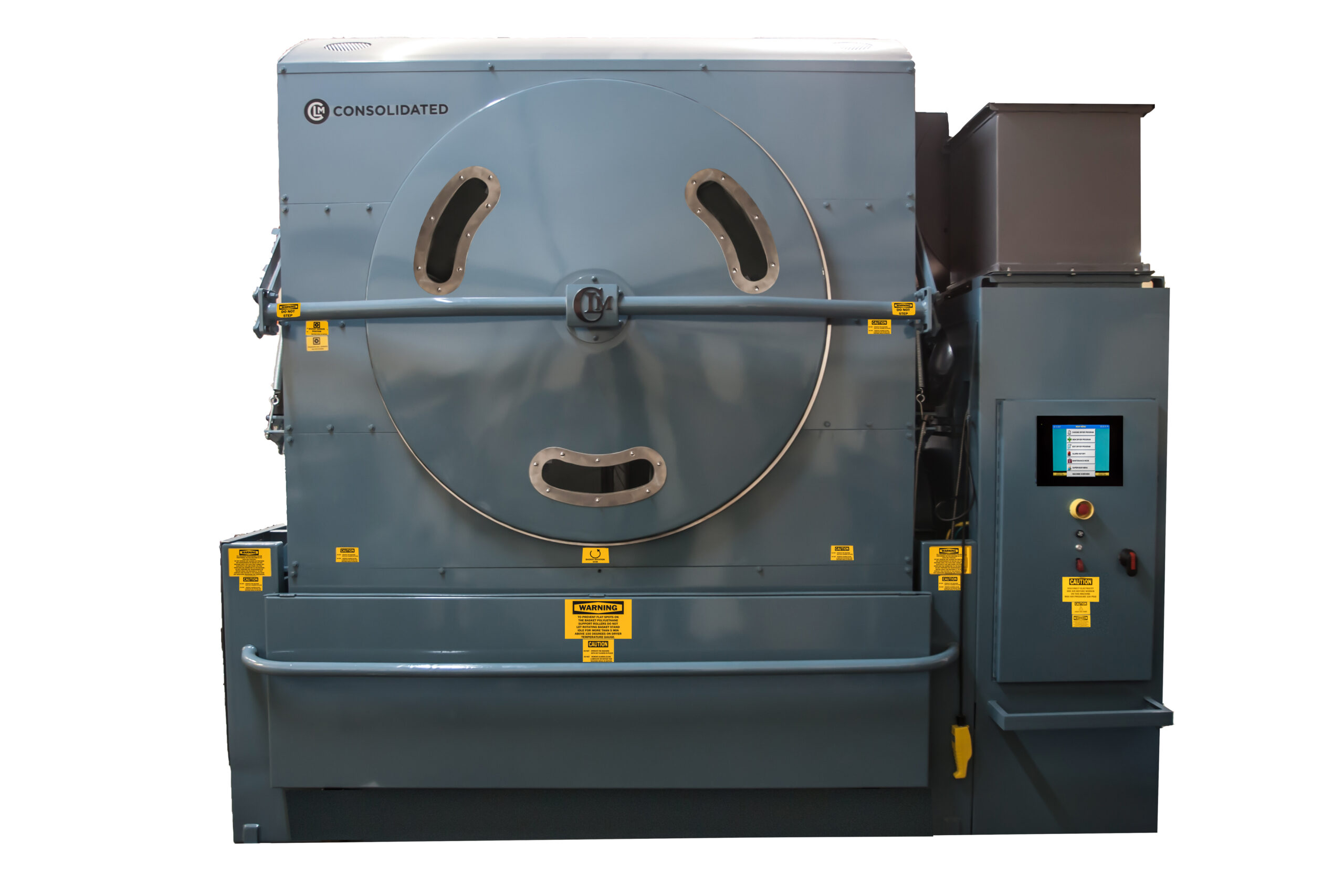
Industrial dryers remove moisture by moving heated air through a rotating basket, but they generate that heat in two different ways. A gas fired industrial dryer machine burns natural gas in an onboard burner to heat the air directly. A steam heated industrial clothes dryer heats the air with a steam chest containing steam-to-air heat exchanger coils built into the machine. Both approaches serve high-volume plants. CLM offers single-door and two-door pass-through industrial tumble dryers in both heat configurations, from 250 to 1,200 pounds of dry weight, so the choice comes down to how each heat source fits the plant.
How Gas Fired Dryers Operate and Where They Fit
A gas fired industrial dryer machine heats air with an onboard burner. CLM’s gas models use a high-efficiency burner coupled to a full-flame-spectrum modulating system with pre-air and gas mixing for proper combustion before the air enters the drying chamber, and a Low NOx burner is available for cleaner combustion. Because the burner is built into the machine and connects to a gas supply, a gas fired dryer is self-contained and does not require steam routed to the equipment. This makes it a common choice for high-volume drying where a facility runs on gas heat.
How Steam Heated Dryers Operate and Where They Fit
A steam heated dryer heats the air a different way. Rather than burning fuel on board, the machine uses a steam chest holding three steam-to-air heat exchanger coils, built with cupro-nickel tubing and silver solder, with an automatic cold air by-pass. Steam supplied to these coils heats the air moving through the basket. The coils, traps, and valves come with the machine. A steam heated industrial clothes dryer is identical in capacity and configuration to its gas counterpart, so the difference is purely the heat source. These machines fit plants where the cost or availability of natural gas makes gas heat the less practical choice.
Comparing Drying Speed and Throughput
When comparing gas vs steam industrial dryers on speed, both heat sources are built for high-volume use, and because the gas and steam models share the same basket sizes and configurations, capacity is comparable across the two. Where they differ is how heat is delivered. A gas fired unit uses a modulating burner to control the heat entering the drying chamber, while a steam heated industrial clothes dryer draws heat from the steam feeding its coils. In practice, throughput on either type depends more on right-sizing the industrial dryer machine to the plant’s daily volume than on the heat source alone.
Comparing Utility Requirements
This is often the deciding factor when specifying industrial dryers. A gas fired dryer needs a natural gas supply and appropriate venting. A steam heated dryer needs a steam supply routed to its coils, along with the traps and valves that come with the machine. The choice to purchase a steam heated dryer is generally determined by the cost and availability of natural gas: when gas is costly or hard to obtain, steam heat becomes the more practical option. The table below summarizes how the two heat sources compare across the factors that matter most when specifying a machine.
| Factor | Gas Fired Dryers | Steam Heated Dryers |
|---|---|---|
| Heat source | Onboard burner that heats the air directly | Steam chest with steam-to-air heat exchanger coils inside the machine |
| Heat exchanger | Direct-fired combustion chamber | Three coils built with cupro-nickel tubing and silver solder |
| Utility needed on site | Natural gas supply and venting | Steam supply routed to the coils; traps and valves included with the machine |
| When it is chosen | Facility heats with gas; self-contained onboard burner | Chosen when natural gas is costly or hard to obtain |
| Routine service focus | Burner and gas train | Heat exchanger coils, traps, and valves |
Maintenance and Long Term Reliability Considerations
Both types share the same construction, with 10-gauge steel basket frames and Timken roller bearings located outside the sealed heating chamber. A gas fired unit requires attention to the burner and gas train as part of routine service, while a steam heated unit depends on the condition of the heat exchanger coils, traps, and valves. On both types, the controls include a machine overview screen that displays inlet and outlet temperatures and faults, so operators can monitor performance and address issues early. Replacement parts and service support are available for either machine.
Choosing the Right Heat Source for Your Facility
The heat source that fits a plant depends on how it is set up to run. A gas fired dryer is self-contained and connects to a gas supply, which makes it a common choice for facilities heating with gas. A steam heated dryer draws on a steam supply instead, and the decision to purchase one is generally determined by the cost and availability of natural gas: where gas is costly or hard to obtain, steam heat becomes the more practical option. Because both are offered in the same capacity range and configurations, choosing between gas vs steam industrial dryers does not force a plant to compromise on size or features. Reviewing your heat source and drying volume with a manufacturer is the clearest way to decide.
Since 1961, Consolidated Laundry Machinery has manufactured industrial laundry equipment trusted by commercial and institutional laundry operations. Matching the heat source to your plant is one part of how industrial laundry machinery sustains uptime in high-volume plants, from drying capacity through finishing. To compare gas and steam models for your plant and match a machine to your facility’s heat source and volume, contact the CLM team.