

Folding is one of the last steps in any laundry cycle, but it often creates the biggest bottleneck. Washing and drying can run at high volume with minimal supervision. Folding, when done by hand, cannot scale as easily. This is why apparel manufacturers, industrial launderers, hotels, hospitals, and correctional facilities increasingly seek an industrial folding machine to keep pace with upstream operations.
What Should Facilities Know Before Investing in an Industrial Folding Machine?
An industrial folding machine delivers the greatest value when it is matched to a facility’s production volume, available floor space, and finishing line capacity. Facilities should evaluate how folding equipment integrates with existing washers, dryers, and finishing systems rather than treating it as a standalone purchase. Reliable service support, replacement parts, and operator training also play an important role in long-term performance.
Key Takeaway: Automating the folding process reduces manual labor, improves fold consistency, maintains production throughput, and supports continuous, high-volume laundry operations. Selecting equipment built for industrial duty and sized for future growth provides stronger long-term operational value.
Many facility managers begin their search for a commercial linen folding machine. That is simply how the equipment is often described online. Once they start comparing options, the more accurate distinction becomes clear. CLM builds industrial-grade equipment engineered for continuous, high-volume use, not light-duty machines borrowed from a smaller-scale setting. That difference in build quality is often what determines whether a folding machine holds up under daily, multi-shift production.
This guide explains how a laundry folding machine works and why high-volume operations rely on automatic towel folders. It also covers common issues with folding equipment and how to decide whether the investment makes sense for your facility. Throughout, we reference Consolidated Laundry Machinery, known as CLM, a U.S.-based manufacturer of industrial-grade laundry equipment headquartered in Pomona, California.
What is an Industrial Folding Machine and How Does it Work
An industrial folding machine automates the folding of towels, linens, and other flat goods after they leave the dryer. Instead of staff folding each item by hand, the machine feeds, measures, folds, and stacks items on its own.
The Purpose of a Towel Folding Machine in a Laundry Plant
A towel folding machine exists to solve one specific problem. Folding is repetitive, slow, and difficult to keep consistent when done manually at scale. Search interest around a folding machine for laundry usually starts with a simple question. Facility managers want to know if automating this one step can meaningfully change their daily output. In high-volume plants, it often does, since folding is one of the few remaining manual steps once washing and drying are automated.
Think about a mid-sized industrial laundry processing thousands of towels a day. Washing happens in large batches. Drying happens in high-capacity dryers built for continuous cycles. Then everything slows down at the folding table, where each towel needs to be folded, stacked, and sorted by hand. That single step can absorb more labor hours than washing and drying combined. An industrial folding machine removes that constraint by matching the pace of the equipment on either side.
Where Folding Fits in the Overall Finishing Line
Folding does not happen in isolation. It sits at the end of a sequence that usually includes washing, drying, and sometimes ironing or flatwork finishing before items are folded and staged for delivery. When one step in that sequence runs slower than the rest, the entire line backs up behind it. A laundry folding machine sized correctly for the plant’s volume keeps that sequence moving at a consistent pace. Otherwise, finished, dried linens end up sitting in bins waiting for available hands.
This is particularly true in facilities that run CLM’s high-capacity dryers, which are designed to process large loads quickly. A dryer capable of handling hundreds of pounds per cycle can produce dried linens faster than a folding table staffed for a smaller operation can keep up with. Sizing folding capacity to match dryer output, rather than treating the two as separate purchasing decisions, keeps the finishing line balanced from end to end.
The Mechanics Behind Automatic Folding
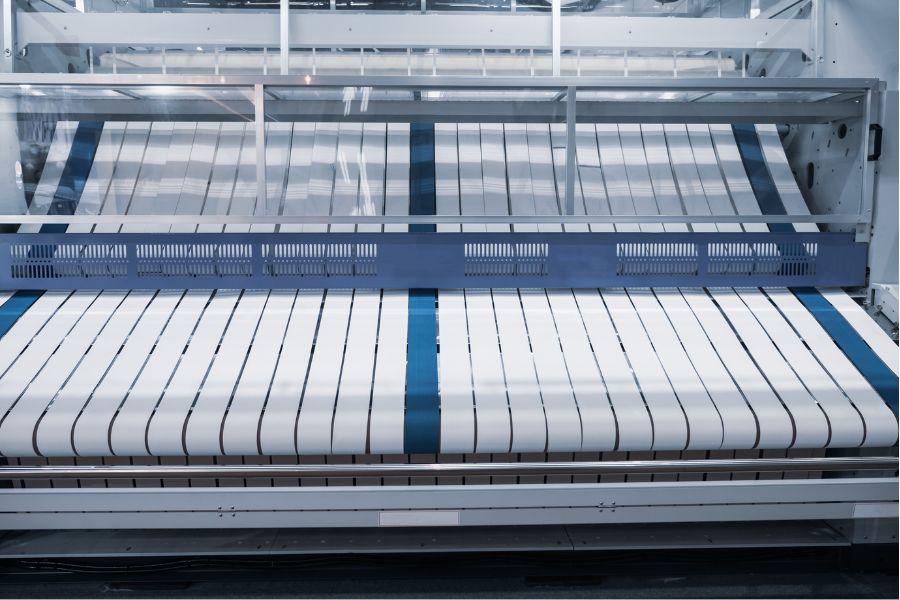
Our detailed breakdown of how a linen folding machine works covers the core mechanism. Items are fed into the machine, aligned, and passed through a series of belts and rollers that create each fold. CLM’s small-piece folder, the SPF-1, uses mechanical and pinch-roll folding to automatically French-fold items. It handles items up to 36 inches by 72 inches and is controlled through a touchscreen PLC interface. Operators set the fold width and stack quantity, and the machine repeats that pattern at a pace that outruns manual feeding.
The physical footprint of the machine matters as much as its speed. CLM’s small piece folder runs on heavy-duty locking casters, allowing it to be wheeled into place easily. It connects to standard electrical and air supply lines without a lengthy installation process. For plants with limited floor space, that compact footprint often matters as much as raw folding speed. It determines whether the machine can fit into an existing finishing line without a costly layout change.
If your plant is still folding by hand, it may be time to see what an industrial folding machine can take off your team’s plate.
Why High-Volume Laundries Rely on Automatic Towel Folders
Once a laundry operation reaches a certain volume, manual folding stops being a minor task and starts becoming a staffing problem. This is where an automatic laundry folding machine earns its place on the plant floor.
Reducing Manual Labor on the Folding Line
Folding is one of the most labor-intensive steps in the entire laundry process. Every hour spent folding by hand is an hour not spent on sorting, quality checks, or other higher-value tasks. Our article on how automatic laundry folding machines improve productivity explains how shifting this task to a machine frees staff for other work. Facilities can gain this benefit without adding headcount as volume grows.
Staffing a folding table also entails managing turnover, training, and the physical strain of repetitive hand folding over long shifts. An automatic laundry folding machine does not eliminate the need for staff, since operators still feed, monitor, and manage the equipment. It reduces the number of people needed to meet a given output target, which matters most during periods of high demand or when staffing is harder to secure.
Improving Fold Consistency and Presentation
Manual folding varies from one worker to the next, and even the same worker’s folds can drift over the course of a long shift. A towel folder machine applies the same programmed fold to every item, every time. For hotels and hospitals, where presentation and consistency matter to guests and patients alike, this steady output is often as valuable as the labor savings itself.
Supporting Multiple Shifts Without Losing Pace
Facilities running two or three shifts face a particular challenge with manual folding. Output can vary noticeably between shifts depending on staffing levels and experience. A laundry folding machine holds a consistent pace regardless of which shift is running it, since the programmed fold settings do not change with the operator. That consistency makes it easier to plan staffing and predict daily output across the entire production schedule, rather than treating each shift as a separate variable.
Curious how an automatic towel folder would perform in your plant? Reach out to CLM to talk through your volume and floor space.
Common Folding Machine Problems and How to Prevent Downtime
Like any mechanical equipment, folding machines wear down over time. Recognizing the early signs of trouble is what separates a quick fix from a full shutdown.
Warning Signs Worth Watching
Our guide to common folding machine problems and how to prevent costly downtime walks through the issues that tend to show up first. Misaligned feeding, inconsistent folds, and slower cycle times are usually early indicators that belts, rollers, or sensors need attention. Ignoring these signs rarely makes them go away. It usually means a bigger repair and more downtime later on.
Operators are often the first to notice a problem, sometimes before it shows up in the finished product. A change in the sound the machine makes, a slight hesitation during feeding, or a fold that needs manual correction more often than usual are all worth reporting right away. Building a habit of reporting small issues as they arise, rather than waiting until a shift supervisor notices reduced output, helps prevent minor wear from turning into a full stoppage.
Maintenance Support That Keeps Folders Running
Routine inspection and cleaning go a long way toward preventing unplanned stoppages. CLM also offers replacement parts and service support for its equipment, so a worn component does not have to mean waiting weeks for a fix. For plants running folding machines around the clock, a short delay in getting the right part can quickly turn into a costly backlog of unfolded linens.
Building a Preventive Maintenance Routine
A structured maintenance schedule, rather than a reactive one, tends to catch small problems before they cause downtime. Simple daily checks, such as clearing debris from feed points and confirming that belts are tracking properly, can be handled by plant staff. More involved inspections, including sensor calibration and drive component checks, are best scheduled at fixed intervals rather than waiting for a visible issue. CLM’s training programs cover these routines directly, so operators know what to check and how often to check it.
Don’t let a small mechanical issue turn into a production delay. Contact CLM for parts and service support before a minor problem grows.
Is an Automatic Laundry Folder a Cost-Effective Investment
Cost is usually the first question any facility manager asks before approving new equipment. An automatic laundry folder is a meaningful purchase, so it deserves a clear look at both sides of the ledger.
Weighing the Upfront Cost Against Long-Term Savings
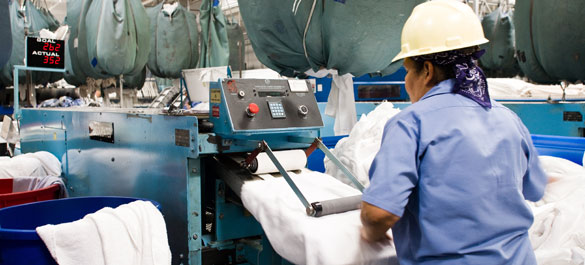
Our analysis of whether an automatic laundry folder is a cost effective move lays out the tradeoff plainly. The upfront cost of a folding machine is real, and it is fair to weigh it carefully. What tends to offset that cost over time is the reduction in manual folding hours. A folding machine also helps a facility keep pace with growing volume without adding staff to the folding line.
It helps to think about the decision in terms of what folding costs currently, not just what the machine costs to acquire. Hours spent folding by hand represent real labor costs every single day, whether or not that cost is broken out separately on a budget sheet. An industrial folding machine shifts that ongoing daily cost into a fixed equipment investment. That is often easier to plan around than a labor requirement that grows with every increase in volume.
Matching a Folding Machine to Your Production Volume
Not every facility needs the same equipment. A plant processing a modest volume of linens has different needs than a large-scale industrial launderer running multiple shifts. Matching machine capacity to actual production volume, rather than buying based on assumptions, is what invests pay off. CLM’s team can walk through your current output and expected growth to recommend equipment sized to fit.
Planning for Growth, Not Just Current Volume
Production volume rarely stays flat for long. A facility that adds a new hotel contract, a new apparel client, or an additional shift can see its folding demand increase quickly. Choosing equipment with enough capacity to absorb near-term growth, rather than sizing strictly to today’s volume, helps avoid outgrowing a folding machine within the first few years of ownership.
Wondering whether the numbers work for your operation? Talk to CLM about your specific volume before making a decision.
How Different Industries Put Folding Machines to Work
The demand for an industrial folding machine varies by setting. Apparel manufacturers, industrial launderers, hotels, hospitals, and correctional facilities all rely on folded linens and towels, but the pressure points vary from one setting to the next.
Apparel Manufacturers and Industrial Launderers
Apparel manufacturers often need folding equipment that can adapt to different item sizes as product lines change. Industrial launderers processing linens for multiple client accounts face a similar challenge, since towel and sheet sizes rarely stay consistent across contracts. A laundry folding machine with programmable fold settings, such as CLM’s small piece folder, lets operators switch between fold specifications without retooling the equipment.
Hotels and Hospitality Operations
Hotels depend on a steady, predictable supply of folded towels and linens every day, regardless of occupancy swings. An automatic towel folder helps hospitality laundry operations keep pace with turnover schedules, particularly during high occupancy periods when manual folding capacity is hardest to scale up quickly. Consistent, professional folds also directly affect the guest experience, since linens are among the few laundry items a guest actually sees and touches.
Hospitals and Healthcare Facilities
Hospitals generate a continuous volume of linens, gowns, and towels that need to be processed and folded quickly to keep pace with patient turnover. A towel folder machine helps healthcare laundry departments avoid the backlog that comes with relying entirely on manual folding during peak demand. Because hospital laundry runs on a tight, continuous schedule, downtime anywhere in the finishing line, including at the folding step, has an immediate operational impact.
Correctional Facilities
Correctional facilities operate laundry rooms on strict, continuous schedules with limited staffing flexibility. An industrial folding machine helps these facilities process linens and uniforms consistently, without depending on variable inmate or staff labor availability to keep the folding step moving. Equipment built for continuous duty, rather than light intermittent use, holds up better under the steady demand these facilities place on their laundry operations.
Not sure which CLM equipment fits your industry’s specific demands? Reach out to discuss your facility type and daily volume.
Choosing an Industrial Folding Machine Manufacturer
Once a facility decides to move forward, the choice of manufacturer matters as much as the choice of machine. Equipment is only as reliable as the company standing behind it.
What to Look for Beyond the Machine Itself
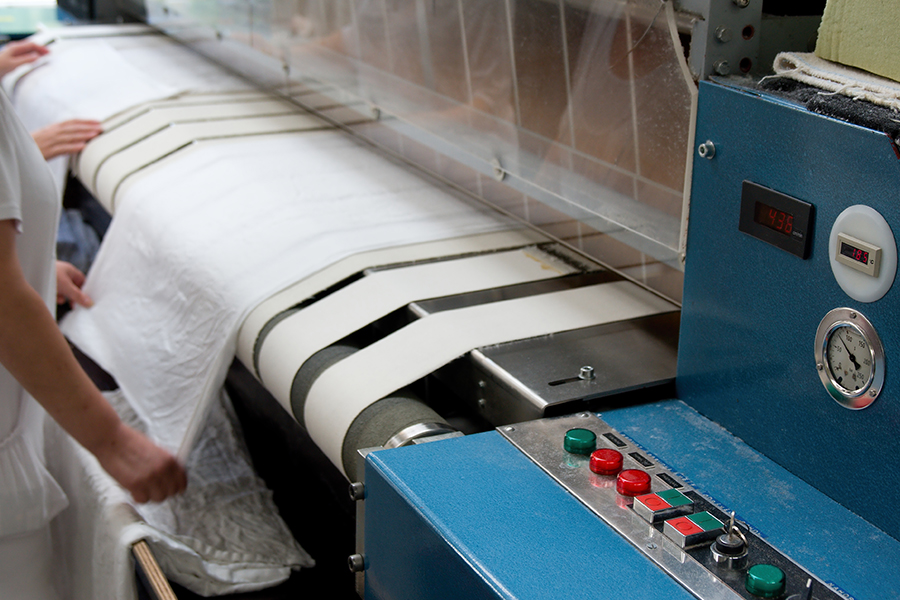
A folding machine is a long-term piece of equipment, so post-sale support matters. Look for a manufacturer that offers replacement parts, service, and training, not just a machine and an invoice. CLM provides all three, along with refurbishing services for facilities that want to extend the life of existing equipment rather than replace it outright. CLM’s industrial dryers, which pair closely with folding equipment in a finishing line, are also equipped with upgraded Low NOx burners.
Why Manufacturing Background Matters
A manufacturer that builds industrial equipment specifically for continuous, high-volume laundry operations approaches design differently than one that adapts equipment from a lighter-duty application. CLM’s product range, including high-capacity dryers, mat rollers, small-piece folders, and vacuum feeders, is built around that continuous-duty standard. Facilities that plan to keep a folding machine running for years benefit from equipment designed for that level of use from the start. That is a better foundation than equipment stretched beyond its original purpose.
Training, Parts, and Refurbishing as Part of the Decision
Buying a folding machine is not a one-time transaction. Operators need training to operate the equipment correctly, and worn components eventually need to be replaced. CLM’s training programs help plant staff understand day-to-day operations and basic troubleshooting, reducing the number of minor issues that become service calls. For facilities with existing CLM equipment, refurbishment services extend the machine’s working life rather than replacing it entirely. This can be a practical option for facilities that want to control capital spending while maintaining equipment reliability.
Who CLM Equips With Industrial Laundry Machinery
CLM manufactures industrial laundry equipment for apparel manufacturers, industrial launderers, hotels, hospitals, and correctional facilities. Its product range includes high-capacity dryers from 250 to 1,200 pounds, mat rollers, small-piece folders, and vacuum feeders. All of it is built for continuous, high-volume use rather than light-duty settings. Facilities considering a towel folder alongside other finishing equipment, such as mat rollers or vacuum feeders, can work with a single manufacturer for the full line rather than coordinating with multiple vendors.
Working with a single manufacturer across dryers, folders, mat rollers, and vacuum feeders also simplifies service and parts sourcing. Instead of tracking down different vendors for each machine on the finishing line, a facility can rely on a single point of contact for maintenance schedules, replacement parts, and operator training. Over the life of the equipment, that kind of consolidation tends to save time even when it is not the primary reason for the original purchase decision.
Ready to see which CLM equipment fits your plant? Contact CLM to discuss your facility’s needs.
Frequently Asked Questions
Worn belts, misaligned rollers, and sensor issues are common causes. Catching these early through routine inspection helps prevent a full shutdown, and reporting small operational changes as soon as they appear keeps minor wear from escalating into a bigger repair.


