How High-Capacity Commercial Laundry Systems and Heavy-Duty Facility Machinery Work and Why They Matter for Businesses
- Gabriel Camacho
- June 12, 2026
- Laundry Machines
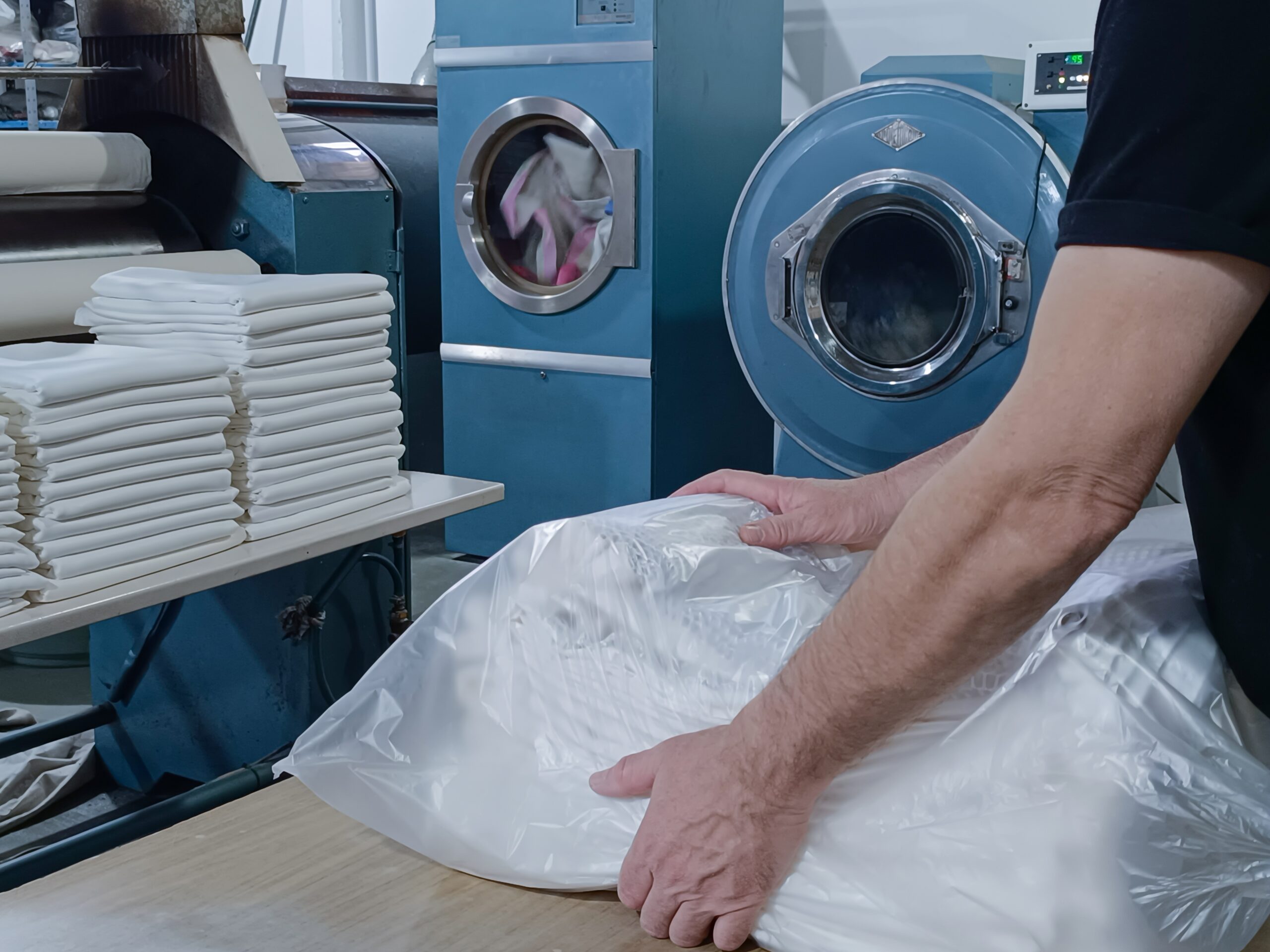
Heavy-duty processing systems transform facility operations by streamlining high-volume textile management. When facilities process large quantities of linens, garments, or floor mats daily, the mechanical infrastructure supporting that throughput determines whether production cycles remain consistent or collapse under demand.
Laundry machinery at the industrial scale is not simply larger equipment; it represents an entirely different operational category with distinct engineering requirements, utility demands, and maintenance disciplines. Plant managers who invest in robust infrastructure consistently sustain production continuity that lighter-duty alternatives cannot match.
People Also Ask
What is the difference between commercial and regular laundry?
Commercial laundry is designed for business-scale volumes and typically uses industrial-grade equipment and processes, often including services like pickup/delivery, stain treatment, folding, and tracking. Regular laundry generally refers to smaller, consumer-scale washing done at home or in standard laundromats.
Is commercial laundry more hygienic?
Commercial laundry can be more hygienic because commercial operations often use higher-temperature wash programs and stronger chemical and process controls aimed at disinfection and consistent results. The exact hygiene outcome depends on the facility’s wash formulas, temperatures, and handling practices.
Why Advanced Laundry Machinery Matters for Facility Operations
Upgraded laundry machinery delivers meaningful operational advantages that compound over the asset lifecycle. Programmable mechanical action ensures consistent cleaning results across diverse fabric types, reducing reject rates and rework cycles that erode throughput. Reliable infrastructure minimizes unexpected downtime, which carries significant cost implications in facilities where textile availability directly affects service delivery.
Beyond throughput, modern systems enable tighter utility management through more efficient heat application and shorter cycle times. For procurement leads evaluating total cost of ownership, the gap between well-specified industrial laundry machinery and undersized alternatives widens materially over time, particularly when maintenance overhead and unplanned stoppages are factored in.
Types of Commercial Laundry Machinery and Extraction Systems
- Washer Extractors for Cleaning and Moisture Removal
Industrial laundry operations rely on a coordinated ecosystem of equipment rather than individual machines operating independently. Washer extractors are a critical component, combining cleaning and moisture extraction in a single machine. By reducing the need for separate handling steps between washing and extraction, these systems streamline workflow and more efficiently prepare goods for the drying stage. Facilities that process a wide range of textiles often use washer extractors because they enable consistent operation across varying load requirements.
- Tunnel Washers for Continuous High Volume Processing
For facilities managing extremely high processing volumes, conveyorized tunnel washers provide a continuous washing solution. Unlike traditional batch systems, tunnel washers move textiles through multiple stages of the cleaning process in a continuous flow. This approach allows large-scale operations to process significant quantities of goods while maintaining organized production flow throughout the facility. Tunnel washers are commonly used in industrial laundries where throughput and workflow consistency are key operational priorities.
- Shuttle Conveyors and Vacuum Feeders for Material Handling
Material handling systems play an essential role in maintaining operational efficiency. Shuttle conveyors transport goods between processing stages while reducing manual movement throughout the plant. Vacuum feeders assist with feeding textiles into finishing equipment, supporting smoother workflow and helping facilities maintain consistent production rates. By reducing manual transfer points, these systems help minimize delays and improve coordination between washing, drying, and finishing operations.
- Dryers and Finishing Equipment for Workflow Completion
Drying and finishing equipment complete the production cycle. Industrial dryers are designed to accommodate demanding laundry environments and support large-volume processing requirements. Additional equipment, such as mat rollers and small piece folders, helps prepare finished goods for packaging, storage, or distribution. Proper coordination among drying, finishing, and material-handling equipment is essential for maintaining an efficient workflow and supporting operational continuity.
The Step-by-Step Process of Integrating Consolidated Laundry Equipment
Successful integration of industrial laundry equipment follows a structured sequence that prevents costly misalignments:
- Facility engineers first evaluate spatial constraints and utility connections, confirming that gas supply, electrical capacity, and ventilation infrastructure can support the selected equipment configuration.
- Procurement teams then match specific operational demands with appropriate high-capacity processing units, accounting for peak load requirements rather than average throughput.
- Professional installation ensures precise alignment of automated controls and material-handling tracks, which is critical for systems in which upstream and downstream equipment must operate in a coordinated sequence.
- Post-installation commissioning validates that each component performs within specified parameters before full production loads are applied.
Skipping the utility assessment phase is the most common integration error, often resulting in performance shortfalls that require expensive retrofits.
Advanced Considerations for Evaluating Dryer Manufacturers
Operations directors evaluating dryer manufacturers must look beyond initial unit cost. Delivery timelines and rapid deployment capability directly affect facility modernization schedules, making vendor responsiveness a procurement criterion alongside technical specifications. Environmental compliance is a non-negotiable consideration; Consolidated Laundry Machinery equips all industrial dryers with upgraded Low NOx burners to align with emissions standards that increasingly govern facility operations.
Long-term service availability, including access to replacement parts, refurbishment services, and operator training programs, determines whether equipment maintains peak performance throughout its full operational life. Vendors who cannot demonstrate parts availability and depth of technical support pose a lifecycle risk that initial pricing rarely offsets.
Resources and Next Steps for Upgrading Laundry Machinery
Procurement teams should begin by reviewing detailed technical specifications to confirm alignment between equipment capabilities and facility goals. Exploring available tax incentives for capital equipment investment can meaningfully offset upfront infrastructure costs, making modernization financially viable within tighter budget cycles.
Consolidated Laundry Machinery provides comprehensive guidance for facilities ready to modernize operations, drawing on deep expertise in industrial-grade laundry machinery across high-capacity dryers, material handling systems, and ancillary processing equipment. Engaging directly with a manufacturer that offers training programs and refurbishment services ensures the investment delivers sustained operational value well beyond the initial installation.