How High-Capacity Dryers Optimize Floor Space and Utility Costs for Industrial Workflows
- CLM
- June 15, 2026
- Laundry Machines
Facility managers operating high-volume laundry workflows face a persistent tension: throughput demands keep rising, but floor space and utility budgets rarely expand to match. Selecting the right industrial dryer machine is not a peripheral decision; it is a core operational lever that directly affects energy spend, labor efficiency, and facility layout viability. Getting it wrong means chronic bottlenecks, inflated utility bills, and equipment that forces costly facility modifications.
Heavy-duty dryers engineered for industrial environments enable plants to process large volumes of linen, textiles, or garments without expanding their physical footprint. Advanced configurations, including programmable controls and flexible installation options, give procurement teams meaningful tools to align capital investment with long-term operational goals.
People Also Ask
How Much Heat Does a Commercial Dryer Produce?
Commercial dryer temperatures typically range from about 120°F to 160°F depending on the cycle and machine, and some commercial dryers can reach up to around 176°F. This heat output is one reason proper ventilation and airflow matter for safe, efficient operation.
What Is The Difference Between a Commercial And Residential Washer And Dryer?
Commercial washers and dryers are built for high-volume, frequent use, with larger capacities and more durable construction, while residential units are designed for typical household loads and lighter-duty cycles. Commercial machines generally prioritize durability and throughput over consumer-focused features.
Why an Industrial Dryer Machine Optimizes Floor Space
Layout constraints are among the most underestimated challenges in industrial laundry operations. A well-specified industrial dryer machine addresses this directly through configurable exhaust placements, which allow facilities to route venting in directions that suit existing infrastructure rather than forcing structural modifications. This flexibility alone can eliminate the need for costly facility retrofits.
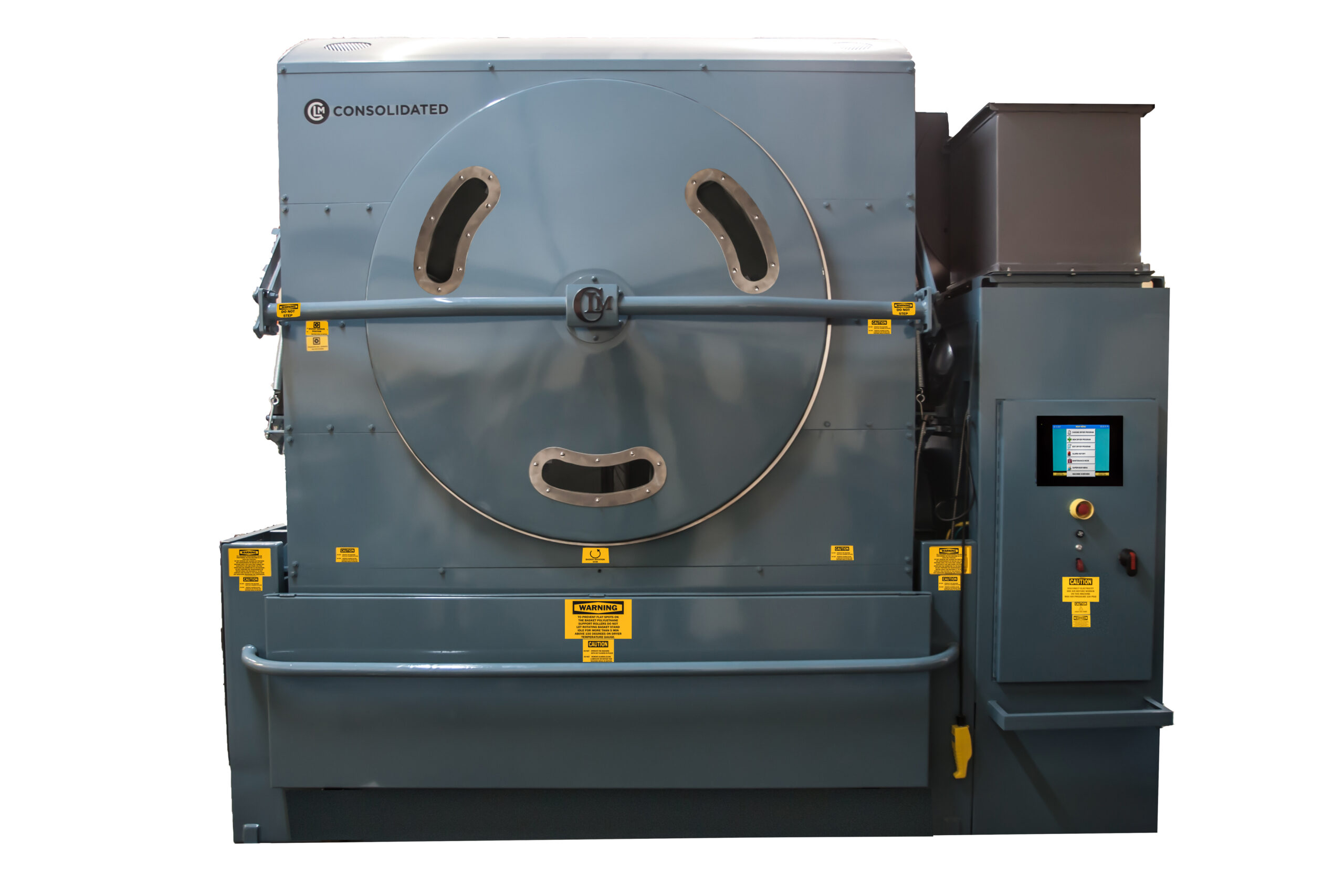
Pass-through door configurations further streamline workflow by allowing staff to load from one side and unload from the opposite side, eliminating the backtracking and staging congestion that slows throughput in tight environments. An industrial clothes dryer with flexible tilt options adds another layer of operational control, allowing operators to position goods for faster, more consistent unloading without requiring additional staging space adjacent to the machine. Collectively, these design features allow a single unit to perform the work that previously required multiple machines and considerably more floor area.
How the Industrial Dryer Machine Reduces Utility Costs
Energy consumption in industrial drying is driven by three primary variables: cycle duration, heat source efficiency, and airflow management. A properly specified industrial dryer machine addresses all three through integrated engineering rather than aftermarket add-ons.
Programmable logic controllers allow operators to calibrate cycle times precisely to load type and volume, preventing the over-drying that consistently inflates gas and electricity consumption in facilities relying on manual or timer-based controls. Consolidated Laundry Machinery equips its industrial dryers with upgraded Low NOx burners, which deliver materially cleaner combustion and meaningfully lower gas consumption than legacy heating systems, while aligning with stringent emissions standards without sacrificing drying performance. Proper airflow management ensures that heat concentrates directly on wet goods rather than dissipating through the drum, reducing the energy required per cycle and shortening overall run times. Together, these features produce a utility cost profile that is consistently lower than that of facilities running older or undersized equipment.
Next Steps for an Industrial Dryer Machine Upgrade
Plant directors evaluating capital equipment should prioritize machines built for extended service life under continuous, high-volume operating conditions. Durability, parts availability, and manufacturer support are not secondary considerations; they determine the true lifecycle cost of the investment.
Consolidated Laundry Machinery, a U.S.-based manufacturer of industrial-grade laundry equipment, engineers its Industrial Tumble Dryers specifically for demanding environments across apparel manufacturing, industrial laundries, hospitals, hotels, and correctional facilities. The company offers refurbishment services, training programs, and replacement parts that meaningfully extend asset longevity and reduce the total cost of ownership over the equipment’s service life. For a deeper breakdown of which configuration suits your facility’s throughput requirements and layout constraints, procurement teams can request a tailored workflow analysis directly from Consolidated Laundry Machinery to determine the right capacity and configuration before committing to a capital purchase.