
How to Select a High-Performance Hotel Washer and Dryer for Your Facility
- CLM
- June 2, 2026
- Laundry Machines
Selecting the right hotel washer and dryer setup affects linen availability, drying speed, labor planning, utility use, and daily room-readiness schedules. For hotels handling sheets, towels, robes, uniforms, and food-service linens, equipment selection should be based on production demand, room layout, dryer capacity, airflow, and long-term serviceability.
A strong hotel laundry operation depends on more than one machine. Washer-extractors, industrial dryers, operator workflow, lint management, and maintenance planning must work together as one coordinated system.
People Also Ask
What should hotels consider when choosing a washer and dryer?
Hotels should consider linen volume, peak occupancy, dryer capacity, utility needs, exhaust requirements, workflow, and maintenance access.
Why is industrial-grade hotel laundry equipment important?
Industrial-grade hotel laundry equipment supports high-volume operation, stronger durability, workflow control, and reliable uptime in demanding hotel laundry environments.
Why Upgrading Your Hotel Washer and Dryer Setup Matters
Hotel laundry rooms often operate under strict turnaround pressure. If equipment is undersized, outdated, or poorly matched, delays can affect housekeeping schedules, linen availability, and labor efficiency.
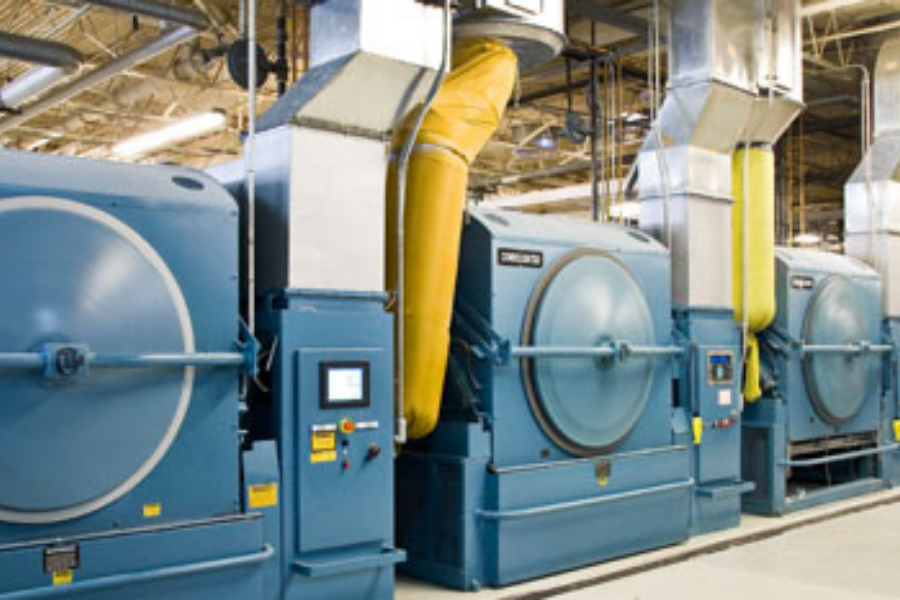
For large hotel properties, dryer capacity is especially important. If dryers cannot keep pace with washer output, clean wet goods wait in carts and slow the entire laundry process. High-capacity industrial dryers help facilities manage larger loads with controlled heat, strong airflow, and consistent performance.
Upgrading also supports better maintenance planning. Older equipment often requires more reactive repairs, while properly specified industrial machinery supports stronger uptime, easier parts planning, and better long-term operating control.
Assessing Total Cost of Ownership
The purchase price is only one part of the investment. Hotels should also evaluate fuel use, drying time, maintenance frequency, replacement parts, labor handling, installation requirements, and expected equipment life.
A lower-cost machine can become expensive if it extends drying cycles, restricts airflow, or requires frequent service. Industrial-grade dryers built for high-volume operation can support better long-term cost control through stronger construction, better heat transfer, and consistent throughput.
Core Features to Review
A modern hotel laundry setup should be evaluated around production flow, not isolated machine features. Washer-extractors should remove as much water as practical before drying, while industrial dryers should provide controlled heat, strong airflow, and reliable basket action.
Important dryer features include:
- Programmable controls
- Durable basket construction
- Efficient burner performance
- Properly engineered airflow
- Accessible lint management
- Maintenance-friendly access points
Consolidated Laundry Machinery focuses on industrial-grade dryer performance through high-capacity models, Low NOx burners, programmable controls, airflow design, and heavy-duty construction.
Smart Integration and Workflow Control
Hotel laundry productivity depends on how well equipment fits the room layout. Even a high-capacity dryer can create problems if cart movement, loading space, duct routing, or maintenance access is poorly planned.
Facility managers should review how goods move from washing to drying, then from drying to folding or storage. Delays often happen when staff must move heavy carts through inefficient paths or wait for available machines.
For larger hotel laundry operations, automation and material handling support can reduce unnecessary labor movement. Shuttle conveyors and coordinated loading processes can help move completed washer loads toward available dryers and improve wash aisle organization.
How to Size Hotel Laundry Machines
Sizing should begin with actual production demand. Room count alone is not enough. Hotels must consider occupancy rates, linen change frequency, towel usage, banquet activity, spa or pool linens, restaurant linens, uniforms, and seasonal peaks.
A practical sizing review should include daily linen volume, peak laundry volume, number of operating shifts, washer-extractor capacity, dryer capacity, available floor space, utility infrastructure, and exhaust requirements.
Dryer capacity should match washer output. If dryers are too small, wet goods wait in carts. If dryers are too large but underloaded, efficiency may drop. The right setup keeps laundry moving from washing to drying to finishing.
Evaluating Room Infrastructure
Before selecting equipment, hotels should evaluate the physical laundry room. Industrial dryers require proper clearance, ventilation, gas or steam connections, electrical service, exhaust ducting, and safe maintenance access.
Key infrastructure checks include doorway access, floor space, exhaust duct condition, makeup air availability, utility capacity, lint control access, operator loading space, and service technician access.
This review should happen before equipment is ordered. Early planning helps prevent installation delays, airflow problems, and costly room modifications.
Common Mistakes When Selecting Equipment
One common mistake is selecting equipment based only on rated capacity. Capacity matters, but real performance depends on airflow, heat input, extraction quality, operator handling, and plant layout.
Another mistake is choosing undersized machinery to reduce upfront cost. In high-volume hotel laundry operations, undersized equipment often runs longer hours, increases staff pressure, creates more wear, and shortens maintenance intervals.
Facilities should also avoid ignoring service and parts support. Equipment selection should include supplier reliability, parts availability, technician access, and operator training resources.
Avoiding Capacity Mismatches
Capacity mismatch is one of the most expensive laundry planning errors. If washer-extractors produce more wet linen than dryers can process, drying becomes the bottleneck. If finishing equipment cannot keep up with dried goods, clean linen may sit unprocessed.
Balanced capacity planning should compare washing, extracting, drying, folding, stacking, storage, cart movement, and delivery to housekeeping. The goal is not just to process laundry. The goal is to maintain predictable linen availability during peak demand.
Maintenance, Parts, and Training
High-volume hotel laundry rooms need equipment that can be maintained without excessive downtime. Maintenance teams should review access points, lint removal procedures, burner service requirements, control diagnostics, and parts availability before selecting machinery.
Operator training also matters. Even well-built equipment can underperform if staff overloads machines, selects incorrect cycles, or skips cleaning procedures.
Consolidated Laundry Machinery supports industrial laundry operations with replacement parts, service support, refurbishing services, and training programs. For hotel facilities, that lifecycle support can be as important as the equipment purchase itself.
Build a Stronger Laundry Operation
A properly specified hotel washer and dryer setup helps protect linen availability, reduce production delays, and improve long-term operating control. The right selection process ensures that hotel laundry equipment and hotel laundry machines support capacity, workflow, maintenance access, and long-term industrial performance.
Consolidated Laundry Machinery provides industrial-grade laundry equipment, high-capacity dryers, mat rollers, small piece folders, vacuum feeders, refurbishing services, training programs, and replacement parts for demanding laundry operations. Contact Consolidated Laundry Machinery today to discuss equipment planning for high-volume hotel laundry facilities.
